
For information in Japanese/日本語はこちら
As of 25 November 2014, the Japanese Pharmaceutical Affairs Law (also known as PAL) was revised, and its title changed to “Act on Securing Quality, Efficacy and Safety of Products Including Pharmaceuticals and Medical Devices” (abbreviated as the PMD Act). The PMD Act provides the legal framework for the regulation of medical devices, in-vitro diagnostic reagents (IVD), pharmaceuticals, quasi-pharmaceutical products, cosmetics and regenerative medical products in the Japanese market. Administration and oversight of the PMD Act’s legal framework is the responsibility of Japan’s Ministry of Health, Labour and Welfare (MHLW). The Pharmaceuticals and Medical Devices Agency (PMDA) is Japan's regulatory agency that works together with the MHLW. It conducts scientific assessments of marketing applications of pharmaceuticals and medical devices, monitoring their post-marketing safety.
TÜV SÜD Japan was the first Registered Certification Body (RCB) registered by the MHLW, and our service covers all certification scopes for medical devices and in-vitro diagnostic reagents under the PMD Act. We are one of the leading RCBs in Japan, based on the number of marketing certificates issued each year.
Under the PMD Act, medical devices and IVDs are classified based on product risk.
There are three types of marketing authorization:
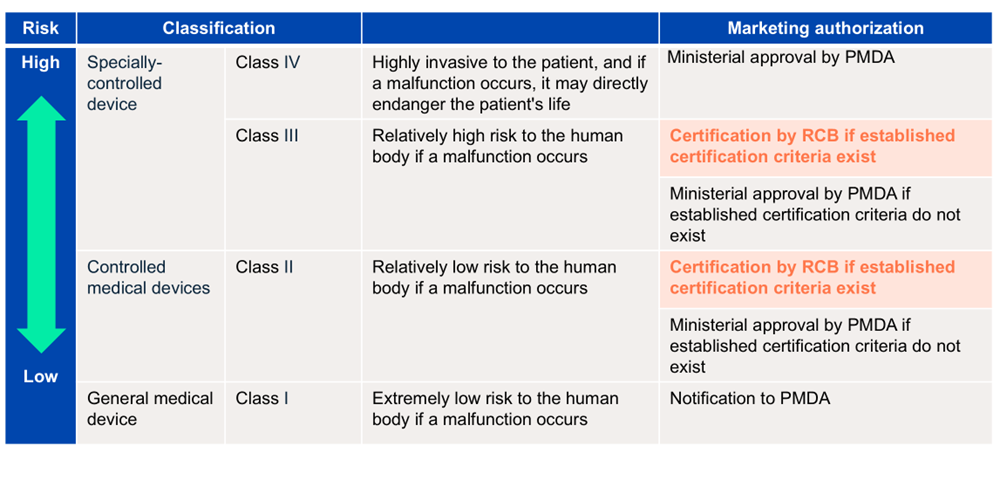
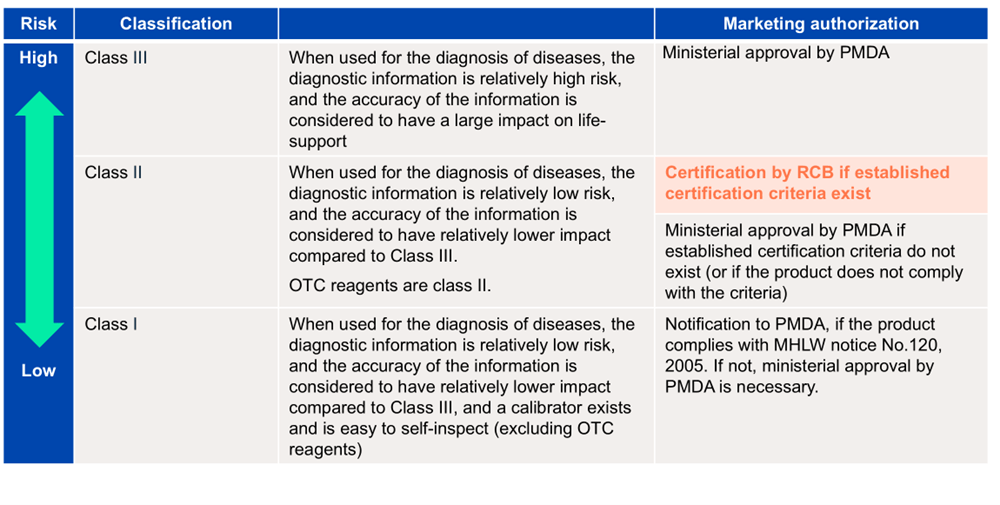
The PMD Act includes a requirement for the QMS of device manufacturers: MHLW Ministerial Ordinance No. 169. The ordinance is partly harmonized with ISO 13485:2016. TÜV SÜD conducts QMS audits for compliance with this QMS requirement.
In principle, an on-site audit is required, but if the auditee (manufacturer) has an existing ISO 13485/MDSAP certificate whose scope includes the product, the audit under PMD Act will be conducted as document audit (an on-site audit is not necessary).
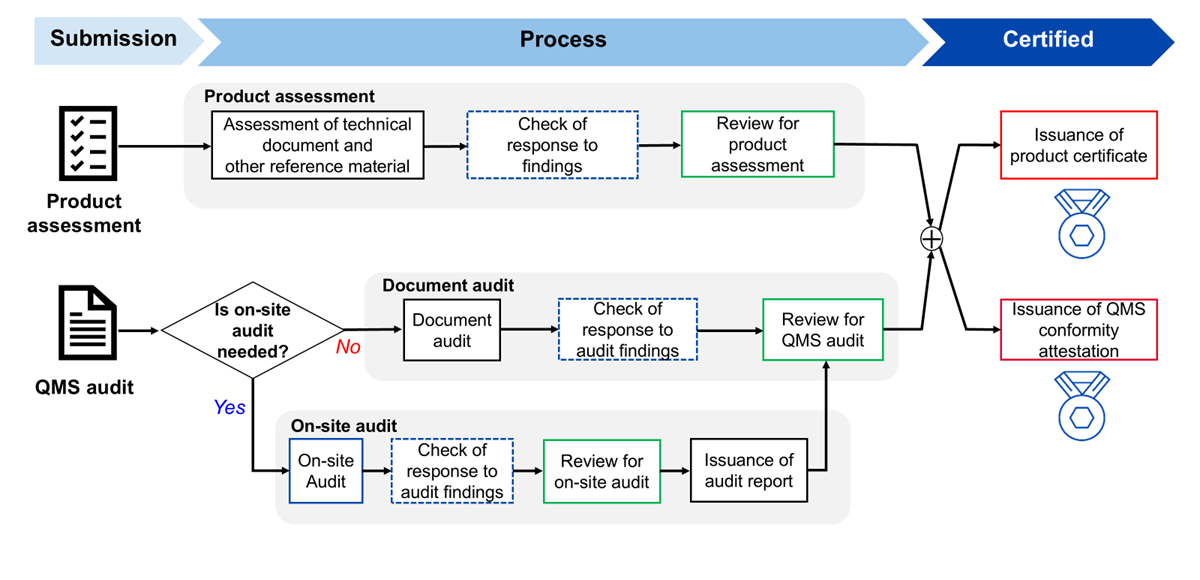
Please feel free to contact us if you have any questions regarding our PMD Act certification service.
Site Selector
Global
Americas
Asia
Europe
Middle East and Africa
