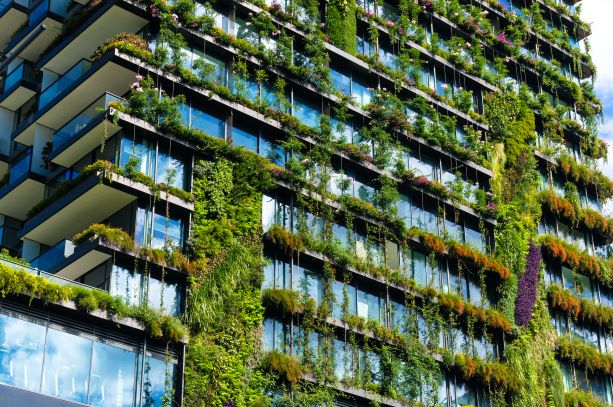
ISO 20887 updates the industrial standards for interior renovation, both in terms of demolition of old materials and the reuse or selection of new materials
The ISO 20887:2020 (Sustainability in buildings and civil engineering works — Design for disassembly and adaptability — Principles, requirements and guidance) standard has a heavy focus on overall sustainability.
The new expectations detailed in ISO 20887 apply in both buildings and civil engineering projects. The new standard can be applied for both incremental changes, as well as complete change-outs. It’s important to note, the application of this standard is not simply a list of set requirements; instead, ISO 20887 is a framework of criteria that need to be met if a builder or developer wants to apply the standard to pass ISO standard review successfully.
A key factor and theme in ISO 20887 is the maximum re-use of existing materials where possible. The standard integrates this in what it calls a “circular economy,” emphasizing the utilization of products as much as possible in order to minimize waste. To achieve this, the standard separates between biological material behavior and technical artificial behavior.
Applications
In terms of application, ISO 20887 works in two ways: adaptability and disassembly.
Adaptability | Diassembly |
|---|---|
Adaptability breaks down into three more versions, all of which are focused on changing conditions, structure, and materials to enhance what already exists. For example, if a multi-story facility already has stairs, the question is whether the existing facility can be modified to add a gradual ramp for the impaired. | Diassembly focuses on reducing and breaking down existing materials to purposefully avoid more treatment than necessary. This way, the builder or developer is actively re-purposing material where possible. For example, long and thick boards can be re-purposed to make simplistic public benches with a minimal amount of finish and re-shaping. |
For every effort towards re-purposing, recycling, and waste minimization, record-keeping is essential to show that the standard has been applied correctly. This includes shop drawing, architectural designs, notes and details of materials used, redirection of existing materials, inventories of surplus, and direction of recycled material to recognized recycling processors.
Get started with TÜV SÜD
Start your ISO 20887 journey with us.