About risk-based inspection
Risk-based inspection (RBI) is a procedure in which industrial risks resulting from equipment or structural degradation are identified, assessed and categorized. Through an analysis of the probability and consequences of failure associated with each equipment, component or structure, a proper risk-based inspection and maintenance programmed is then developed, customized to your business.
A risk-based inspection is crucial for optimizing the operation and maintenance of industrial plants in various industries. It helps you to meet the financial, reliability and regulatory needs of the industry by improving your plant’s performance, availability and safety. Also, a risk-based inspection extends the lifetime of your plant by establishing a long-term testing and inspection procedure.
Optimize your plant's condition with a risk-based inspection and maintenance program
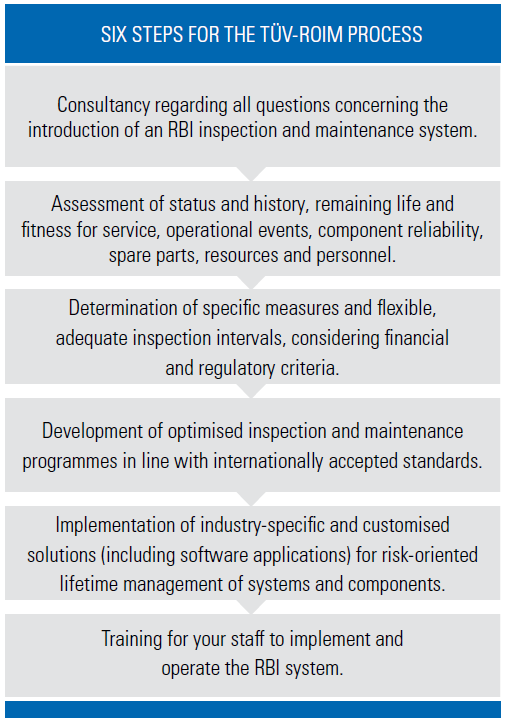
TÜV-RoiM (risk-oriented inspection and maintenance) is TÜV SÜD America's strategy for developing optimized, cost-effective inspection and maintenance programs within an asset and risk management context. The strategy combines reliability and risk assessments with information extracted from expert judgement, physical models, and plant-specific and generic data. With this assessment, critical components can be differentiated from non-critical components, helping you determine where special maintenance measures need to be taken. We base our qualitative and quantitative techniques on internationally accepted standards and guidelines, and then individually tailor the solutions to your specific concerns.
Get started with TÜV SÜD
Start your Risk-Based Inspection journey with us.