
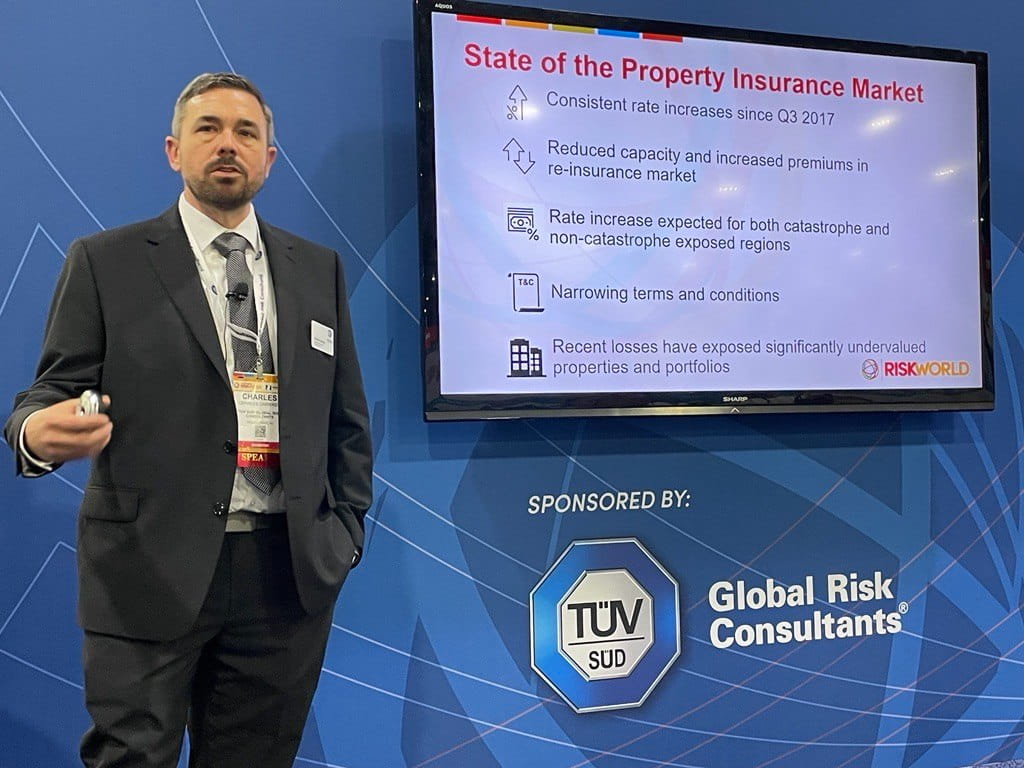
In an era of rate increases, reduced capacity, and ever-expensive natural catastrophes, risk managers must take a more holistic view of their risk profiles. While they need risk engineering basics like recommendations to reduce fire and boiler & machinery exposures, they would also be wise to analyze arc flash risks, dust hazards, inflation’s effect on valuations, interdependencies, and more.
Acting now can help companies improve negotiations with underwriters and drastically improve risk mitigation strategies.
In a RIMS RISKWORLD 2023 speaking session, Charlie Carriker, Strategic Sales Leader - Project Services for TÜV SÜD Global Risk Consultants explained how any risk manager can dig deeper and build a 360-degree view of their risk portfolio. Here are some best practices:
Conduct a property assessment. Collect COPE data and secondary modifiers from individual locations and feed them into modeling systems to get an initial risk rating. Be sure to also assess earthquake and windstorm exposure – and don’t forget to think about ancillary issues like the water supply.
“You can have the best sprinkler system in the world but if the water supply goes down, the system is not going to operate as designed,” said Carriker.
Look out for electrical hazards, dust hazards, and more. As you examine your location for fire hazards, be particularly deliberate in analyzing electric hazards. In fact, the NFPA reports that 24% of all industrial fires are started by electrical system issues — more than any other cause. Using non-destructive technology like infrared thermography, you can scan for abnormal temperatures to determine if components, breakers, or even rollers on automated conveyors are overheating and coming to the end of their life cycles. Meanwhile, arc flash assessments examine electrical distribution and help determine what level of personal protective equipment (PPE) employees must wear to maintain safety.
“By having this information, you can do preventative maintenance and have downtime when you want — not when it’s forced upon you,” said Carriker. “By teaching employees what PPE to wear and how to properly wear it, you are going to keep them safer and prevent more accidents.”
Analyze business continuity and emerging risks. Identify how your risk strategy handles emerging risks like inflation or supply chain issues — and create a business continuity plan to combat those perils. Take a deep dive into your supply chain to determine where you may have the potential for business interruption. Examine your property valuations to ensure that inflation has not left you with limits that could be exceeded in the face of a catastrophe.
“You can have a great business continuity plan but if you haven't stress tested it, you haven't fully implemented it,” said Carriker.
Examine emerging threats like alternative fuels and AI. From cybersecurity to climate change to advancements in artificial intelligence — risk managers must keep their fingers on the pulse of emerging macro trends that could impact their businesses.
Sustainability efforts may introduce alternative fuels or power sources into your facility – meaning you must understand the risks associated with them. For example, are you prepared to address the unique challenges that come with lithium-ion battery storage or the aftermath of a lithium-ion fire?
Also are you prepared for ways AI might change your business operations over the next few years?
“We are in a data-driven market and AI is taking data, aggregating it and producing predictive analyses,” said Carriker. “And that’s just the beginning. The property insurance market is primed for the development and implementation of AI and we’ve got to keep our eyes on the possible risks it adds to our portfolios.”
Position Yourself for Success
Carriker also outlined steps risk managers can take to position themselves for success:
“There is not a one-size-fits-all solution. You need to analyze your individual risks and work with an advisor to identify the areas to focus on,” said Carriker. “Budgets aren’t unlimited so make sure you’re focusing on the pieces with the highest potential return on investment to build a program that works for you.”
Learn more about arc flash analysis, dust hazard analysis, property valuations, and more on our website. Also, read about how we helped Detroit Diesel Remanufacturing lower exposures by assessing electrical risks with infrared thermography and other risk engineering methods.
Site Selector
Global
Americas
Asia
Europe
Middle East and Africa
