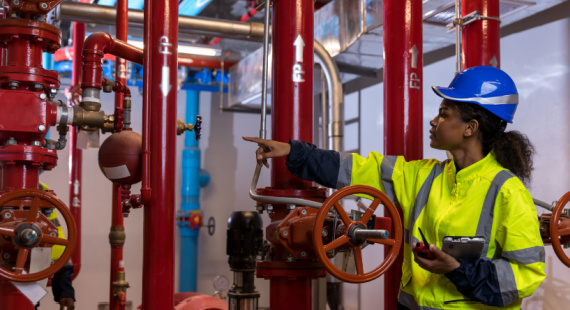

Imagine an online retailer taking proactive measures to ensure fire protection code compliance in its warehouses. By rigorously adhering to fire protection codes, the company can implement advanced fire detection and suppression systems across its facilities. A commitment to compliance not only protects their vast inventory and employees but also prevents costly disruptions, potential legal repercussions, and reputational damage. A proactive stance on code compliance can lead to smoother loss control inspections, lower insurance premiums, and a reinforced reputation for safety and reliability.
In this blog post, let’s explore how companies can successfully navigate the complexities of fire protection code compliance, reaping significant benefits while avoiding potential hazards and perils.
What Codes Govern Fire Protection in the United States?
In the United States, fire protection is governed by several codes and standards designed to minimize the risk of fire and ensure the safety of occupants at all types of facilities. The primary codes include:
1. National Fire Protection Association (NFPA) Codes: The NFPA develops and publishes more than 300 codes and standards intended to minimize the risk and effects of fire. Key NFPA codes include:
- NFPA 1: Fire Code
- NFPA 101: Life Safety Code
- NFPA 13: Installation of Sprinkler Systems
- NFPA 25: Inspection, Testing, and Maintenance of Water-Based Fire Protection Systems
2. International Fire Code (IFC): Published by the International Code Council (ICC), the IFC provides regulations to safeguard life and property from fire and explosion hazards. It is widely adopted by local jurisdictions.
3. Local and State Codes: These may vary by location but often incorporate or reference NFPA and IFC standards. It's crucial to be aware of and comply with local amendments and requirements.
What are NFPA Codes?
The National Fire Protection Association (NFPA) is a global nonprofit organization devoted to eliminating death, injury, property, and economic loss due to fire, electrical, and related hazards. NFPA codes are a series of codes and standards that provide guidelines for fire safety and prevention. Many members of the Global Risk Consultants engineering team help to develop and update NFPA codes due to their vast expertise.
Some of the most important NFPA codes include:
- NFPA 1: This code, also known as the Fire Code, provides requirements for preventing fire and ensuring safety in both new and existing buildings.
- NFPA 101: Known as the Life Safety Code, it focuses on protecting building occupants from fire and related hazards, addressing egress, emergency lighting, and fire alarms.
- NFPA 72: The National Fire Alarm and Signaling Code sets the standard for installation, performance, inspection, testing, and maintenance of fire alarm systems.
- NFPA 70: The National Electrical Code (NEC) sets the benchmark for safe electrical design, installation, and inspection to protect people and property from electrical hazards. NFPA 70B and NFPA 70E are particularly important for electrical safety and hazards in the workplace.
- NFPA 652: The explains that Dust Hazard Analysis (DHA) is necessary to evaluate the potential for fires and explosion hazards associated with combustible dust within a facility.
How Do You Ensure Compliance with Local Fire Safety Regulations and Codes Across All Your Properties?
Ensuring compliance with local fire safety regulations and codes across multiple properties can be challenging but is essential for maintaining safety and avoiding legal and financial repercussions. Here are steps to achieve compliance:
- Conduct Regular Audits: Perform periodic fire safety audits to identify and address any compliance gaps. Use checklists based on local and national codes.
- Stay Updated on Code Changes: Fire safety codes are periodically updated. Keep abreast of changes by subscribing to updates from relevant authorities and organizations like NFPA.
- Implement a Fire Safety Management System: Develop a comprehensive fire safety management system that includes policies, procedures, and responsibilities for maintaining fire safety compliance.
- Train Staff and Contractors: Ensure that all staff and contractors are trained in fire safety practices and understand the importance of compliance with fire protection codes.
- Engage with Fire Safety Experts: Partner with fire safety consultants or risk engineers to conduct compliance assessments and provide expert advice on maintaining code compliance.
- Maintain Documentation: Keep detailed records of inspections, maintenance, and compliance efforts to demonstrate adherence to fire safety regulations during inspections or audits.
Which Code is Related to Fire Protection Systems?
When it comes to fire protection systems, several NFPA codes are directly related to their design, installation, and maintenance:
- NFPA 13: This code governs the installation of sprinkler systems, outlining requirements for system design, water supply, and installation practices.
- NFPA 25: This code focuses on the inspection, testing, and maintenance of water-based fire protection systems, ensuring they function effectively when needed.
- NFPA 72: This code sets standards for fire alarm and signaling systems, covering installation, performance, and maintenance to ensure reliable operation.
- NFPA 750: This code pertains to water mist fire protection systems, providing guidelines for their design, installation, and maintenance.
- NFPA 2001: This code addresses clean agent fire extinguishing systems, providing requirements for the design and installation of systems that use gaseous agents to suppress fires.
By understanding and adhering to these fire protection codes, risk managers, insurance brokers, and other stakeholders can significantly enhance the fire safety of their properties and ensure compliance with essential regulations.
Electricity is the leading cause of industrial fires. Read our whitepaper to learn more about the most effective ways to assess electrical fire risk, arc flash boundaries, and learn how one big business made its plants safer with fire protection engineering.