Global | EN

Sled testing and crash test simulation

Obtain realistic crash data for components, seats and restraint systems with sled testing that supports development, type approval and CoP.
Crash Dummy

What are sled tests for crash test simulation?

Sled tests are dynamic tests used to simulate crash loads on vehicle components, seats, restraint systems and interior structures. Instead of carrying out a full vehicle crash test for every development step, sled testing recreates defined crash pulses under controlled laboratory conditions. 

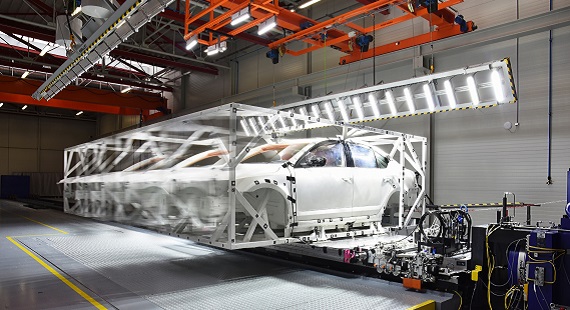
TÜV SÜD’s dynamic component testing, also known as DYCOT, combines physical sled testing with virtual simulation to support non-destructive crash test simulation.  This gives manufacturers and suppliers reliable data for design optimisation, regulatory preparation and market access. 

Depending on the test scope, sled tests can simulate frontal, rear and side impact scenarios. They are commonly used during product development, type approval preparation and conformity of production testing. 

Watch DYCOT sled testing in action

See how TÜV SÜD uses non-destructive dynamic component testing and our state-of-the-art sled test technology to simulate realistic crash conditions for vehicle components, seats and restraint systems.

Why sled testing is important

Identify design risks earlier

Pictogram in .SVG for Hidden risks in the supply chain
Assess how components, seats and restraint systems perform under defined crash pulses before progressing to full vehicle crash testing. This helps engineering teams detect potential issues earlier and make evidence-based design improvements.

Generate repeatable test data

Pictogram in .SVG for Connection
Run tests under controlled laboratory conditions to produce consistent and comparable data. This supports design validation, technical decision-making and confidence in product performance across development stages.

Use prototypes more efficiently

Pictogram in .SVG for Product Optimisation
Reduce reliance on repeated full vehicle crash tests by testing specific components or assemblies. This can help save development time, optimise prototype use and focus full crash testing on key validation milestones.

Prepare for approval and assessment

Pictogram in .SVG for tool safety
Use physical test data to support type approval preparation, conformity of production testing and consumer safety assessment programmes such as Euro NCAP, depending on the product scope and target market.

Sled testing services for vehicle components

TÜV SÜD tests a wide range of automotive components, seats, restraint systems and interior structures under defined dynamic load conditions. 

Our services include: 

  • Physical crash simulations for frontal, rear and side-impact scenarios  
  • Seat, head restraint and whiplash testing  
  • Airbag and restraint system testing  
  • Instrument panel, central console and interior trim testing  
  • Fuel tank, roof rack and accessory testing  
  • Euro NCAP-related testing, including Virtual testing, knee mapping and whiplash  
  • Dynamic testing for vehicle components and structures such as Hydrogen tanks 
  • Test set-up, sensor systems, data acquisition and test reporting 

Our accredited laboratory performs tests against a wide range of regulations, standards and industry requirements, including UN ECE, FMVSS, ADR, FIA, NCAP, ISO, AMS and EASA CS requirements. 

Relevant UN ECE tests include UN ECE R11, R16, R17, R21, R67, R80, R110 and R129. 

Whiplash and rear-impact seat testing

Whiplash testing helps manufacturers assess how vehicle seats and head restraints perform during rear-impact conditions. These tests are important for developing safer seat systems and reducing the risk of neck injuries in road traffic accidents. 

As part of TÜV SÜD’s DYCOT sled testing services, we support dynamic whiplash tests for seat and head-restraint development. The tests can assess seat geometry, head-restraint position, adjustability, locking mechanisms and overall seat integrity under defined rear-impact crash pulses. 

Whiplash test results can support product development, safety validation and preparation for consumer safety assessment programmes such as Euro NCAP and other global regulations. Depending on the programme scope, testing may apply to front and rear seats and can help manufacturers improve occupant protection before final vehicle assessment. 

BioRID-II dummy model for whiplash testing

For whiplash and rear-impact seat testing, TÜV SÜD can use the BioRID-II dummy model to assess occupant response under defined crash conditions. 

BioRID-II is designed to support rear-impact testing and provides a more human-like response of the spine, head and neck during low-speed rear-end collision scenarios. Equipped with sensors, the dummy helps capture data on occupant movement and injury-relevant parameters during impact. 

This supports accurate and repeatable whiplash testing for seat and head-restraint development, helping manufacturers evaluate product performance and improve occupant protection. 

How TÜV SÜD supports your testing programme

TÜV SÜD provides a single source of support for dynamic component testing, crash test simulation and whiplash testing. Our technical experts help you plan, set up and carry out sled tests based on your component, vehicle programme, target markets and validation needs. 

We can help you: 

  • Define the right test approach, crash pulses and set-up requirements 
  • Prepare instrumentation and measurement requirements 
  • Conduct sled tests under controlled and repeatable laboratory conditions 
  • Combine physical testing with virtual simulation where required 
  • Evaluate test data and prepare reports for development, approval or internal quality purposes 
  • Protect sensitive development prototypes through controlled laboratory processes 

Our facilities are designed for complex testing programmes, including parallel customer projects where confidentiality and prototype security are critical.

Start your sled testing project with TÜV SÜD

Discuss your component, test requirements and target markets with TÜV SÜD to define the right sled testing approach.

DYCOT laboratory capabilities

Sled testing system

Our IST CSA Advanced Acceleration System supports high-G and low-G crash pulse simulations for a wide range of component and structure tests. 

Key capabilities include: 

  • Acceleration force up to 2.5 MN 
  • Maximum speed up to 90 km/h 
  • 90g at 1,000 kg and 35g at 5,000 kg 
  • Maximum gradient up to 14G/MS 
  • Repeatability of 0.5 km/h or 1G 
  • Working stroke of 1.7 ms 
  • Low-G simulation from 5G to 12G 
  • Personalised crash pulse iterations 
  • Euro NCAP whiplash testing capability 
  • Second-row whiplash testing capability 
Active lateral intrusion simulation

Our ENCOPIM Active Lateral Intrusion Simulation System supports the simulation of side-impact intrusion scenarios. 

Key capabilities include: 

  • Multi-actuator simulation of side crashes 
  • Structural deformation and sled movement simulation 
  • Simultaneous driver and passenger loading 
  • Side and central airbag development support 
Measurement, imaging and dummy systems

Our laboratory uses advanced measurement and imaging systems to capture detailed test data. 

Capabilities include: 

  • HS Vision LED lighting and camera system 
  • Kistler data acquisition and sensor system 
  • In-house dummy family including HIII 5%, HIII 50%, HIII 95%, WS, BioRID-II and Q-series dummies 
  • Other dummies available in local pool, please reach out for availability 
  • 2D and 3D static and dynamic photogrammetry 
  • 3D scanning 
Accreditation and prototype security

TÜV SÜD’s dynamic component testing laboratory is ISO/IEC 17025 accredited and has passed a TISAX information security audit for handling development prototypes. 

The laboratory also includes independent preparation rooms to support customer confidentiality, especially when parallel sled tests are conducted for different customers. 

For approval-related projects, TÜV SÜD can also draw on its wider network of accredited, authorised and nominated experts. This includes support linked to recognised approval bodies and authorities in Europe and other key markets, such as KBA, RDW, VCA, NSAI, INMETRO and VSCC, depending on the project scope and target market. 
Frequently asked questions (FAQs)

What is sled testing in automotive safety?
Sled testing is a dynamic test method used to simulate crash loads on vehicle components, seats, seat belts, restraint systems and structures. It recreates defined crash pulses under controlled laboratory conditions, helping manufacturers assess safety performance without conducting a full vehicle crash test for every development step.
What components can be tested with sled testing?
Sled testing can be used for seats, head restraints, airbags, restraint systems, instrument panels, central consoles, interior trims, fuel tanks, roof racks, accessories and other vehicle components or structures. The exact test scope depends on the component, crash scenario and applicable requirement.
What is whiplash testing?
Whiplash testing evaluates how a vehicle seat and head restraint perform during rear-impact conditions. It helps manufacturers assess occupant protection, improve seat and head-restraint design and reduce the risk of neck injuries in rear-end collision scenarios.
How are Euro NCAP whiplash tests performed?
Euro NCAP whiplash testing uses dynamic rear-impact seat tests to assess seat and head-restraint performance. The test set-up can evaluate factors such as seat geometry, head-restraint position, adjustability and occupant response under defined rear-impact conditions.
What is the BioRID-II dummy used for?
BioRID-II is a rear-impact dummy model used for whiplash testing. It helps assess head, neck and upper-body response during low-speed rear-end collision scenarios and provides data for evaluating seat and head-restraint performance.
Can sled testing support type approval and conformity of production?
Yes. Sled testing can generate physical test data to support type approval preparation, conformity of production testing and internal quality requirements, depending on the component, regulation and target market.

Knowledge highlights

White paper

Advanced Non-Destructive Testing Methods for Automotive Components

#Service knowledge #Automotive

Non-Destructive Testing for Automotive Components

Article

Article High-Voltage Testing for E-Mobility

#Service knowledge #Automotive

High Voltage Testing

Article

TÜV SÜD’s DYCOT laboratory

#Service knowledge #Automotive

Advanced whiplash testing at TÜV SÜD’s DYCOT laboratory