
Author's Profile
TÜV SÜD Expert
TÜV SÜD Expert
Staying updated with emerging technology is vital for risk management, as it ensures equipment operates optimally and safeguards against fires and other critical hazards.
Enter infrared thermography.
The advanced, non-destructive technique that has grown immensely popular because it easily identifies electrical problems and machinery breakdown threats. When electrical problems and equipment breakdown are not identified, managed, and repaired quickly, the consequences are dire – leading to untimely shutdowns, property losses, increased operating costs, and business interruption.
Let’s explore how infrared thermography can help risk managers, facilities managers, maintenance managers, and others better understand their unique risk profiles and prep for insurance renewals.
What is infrared thermography?
Infrared thermography is the science of capturing and analyzing thermal information from machinery using infrared cameras. Every object with a temperature above absolute zero emits infrared radiation that is invisible to the human eye but can be detected by specialized sensors and cameras. Infrared thermography cameras capture this emitted radiation and convert it into a thermogram, or visual image, representing the temperature distribution across the object’s surface. The amount of infrared radiation emitted by an object increases as it’s temperature increases. Infrared thermographic scanning can measure these emissions across a surface making it possible to form a thermal map of that surface and identify any areas of concern.
Infrared scanning is fast, accurate, and non-destructive. It helps risk managers and company leaders better understand fire and many potential failure risks in electrical, mechanical equipment, production machinery and within many other applications. Infrared thermography inspections and thermographic scanning/testing are best carried out by a certified Thermographic Consultant with a state-of-the-art camera and other predictive instrumentation (i.e. airborne ultrasound) to show a piece of equipment’s progression toward failure.
How does infrared thermography work?
Trained professionals use properly calibrated infrared thermal imagers to detect abnormal thermal patterns, hot spots and other problems in equipment or electrical components. Infrared cameras are typically equipped with a lens, thermal sensor, processing electronics, a mechanical housing, and an LCD display.
The thermal sensor has multiple detectors, which are sensitive to infrared radiation. When pointed at an object or area:
- The infrared camera detects radiation emitted.
- The detected radiation is then converted into electrical signals.
- These signals are processed to create thermographic images (thermograms) with varying colors or intensities corresponding to different temperatures.
For example, in a color thermogram, warmer areas might be represented in red, while cooler areas appear in blue. Advanced cameras can also provide quantitative data, enabling precise temperature measurements from the captured image.
Case study: Manufacturing giant nVent partnered with Global Risk Consultants to implement infrared thermography in its facilities. By identifying abnormal temperatures and fire risks in equipment, the company was able to quickly mitigate any issues – protecting its people and assets. Plus, infrared thermography helped the company keep a clean claims history, leading to competitive insurance rates in a historically hard property insurance market.
What is infrared thermography used for?
Infrared thermography has a wide array of applications in both industrial and business settings:
Predictive maintenance: Thermal imaging is used to detect abnormalities in equipment, such as overheating components, which can signify impending failures.
Building inspections: Thermographic images can identify heat losses, moisture intrusion, and structural issues by visualizing temperature differences in walls, roofs, and floors.
Electrical systems: By monitoring electrical cabinets and components, thermography can detect hot spots caused by loose connections or overloaded circuits, preventing potential failures or fires.
Fluid systems: Infrared cameras can detect blockages or leaks in pipelines by observing temperature variations.
Roofing: Infrared imaging helps identify wet insulation in flat roofs by spotting areas of heat retention.
Risk management strategies: By understanding vulnerabilities in infrastructure displayed by infrared imaging, risk managers can implement predictive and preventative maintenance plans to reduce the risk of serious issues like fire, leaks, or machinery breakdown.
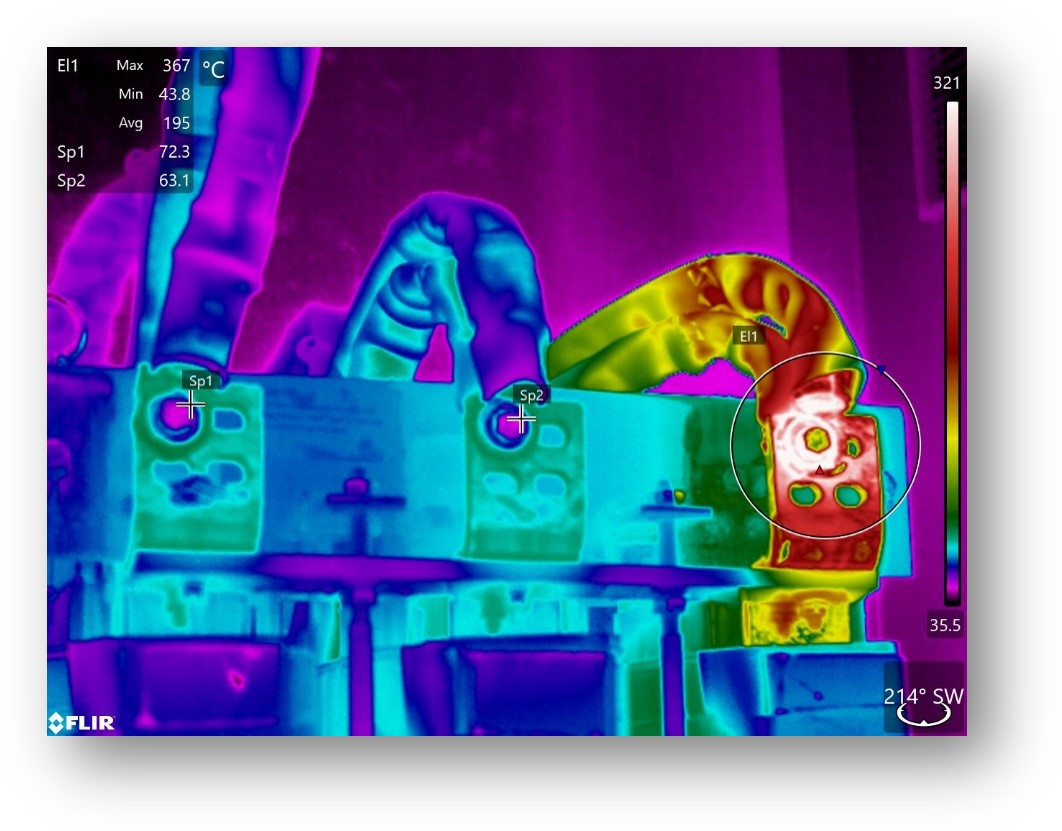
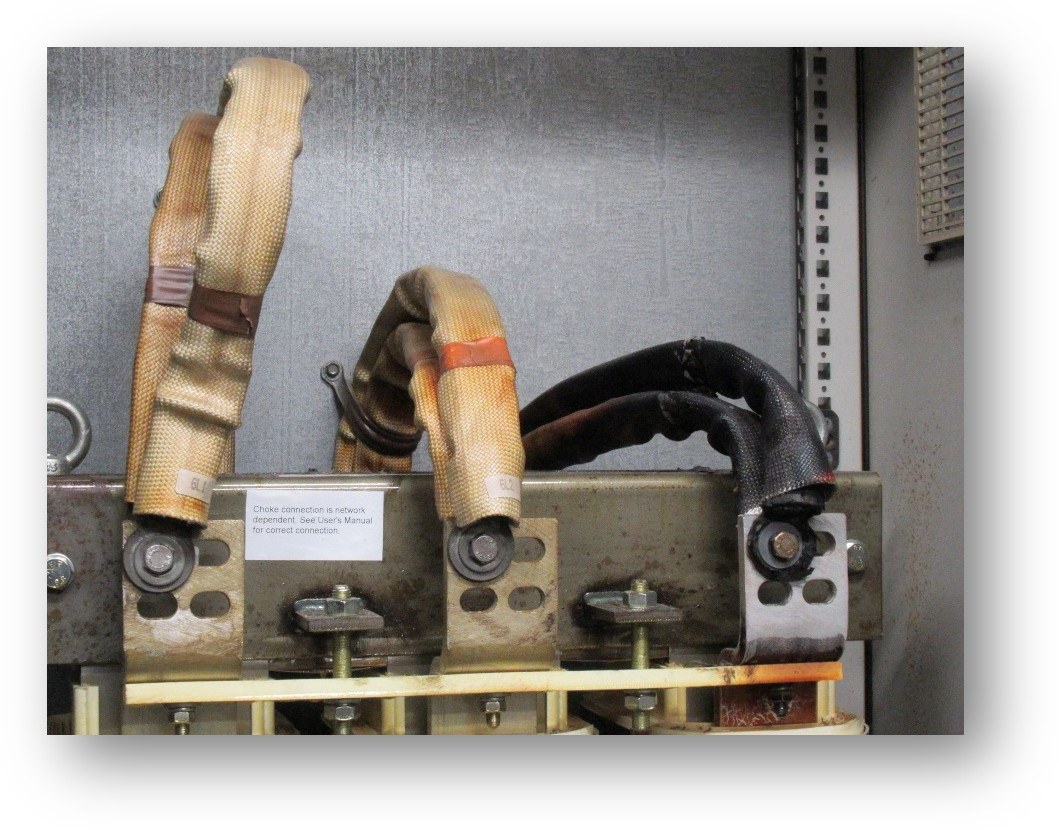
These thermographic images taken by a Global Risk Consultants engineer show electrical equipment that had heated to 360 degrees Celsius – almost 700 degrees Fahrenheit due to a loose cord and deteriorated component. Such a high temperature and showed this was a fire risk that needed to quickly be mitigated.
How accurate is infrared thermography?
The accuracy of infrared thermography depends on the expertise of the thermographer and the quality of thermographic imaging camera used. Cameras can range from a few hundred dollars to the tens of thousands. High-quality cameras can measure temperature with an accuracy of ±2% or better. The range of accuracy, spot size, and resolution between high-end and low-end cameras is astronomically different.
Expertise is also a critical factor in the accuracy of infrared thermography. It’s important that thermographers and professionals have proper training. Even the most sophisticated cameras will only provide the right accuracy if the right input data is loaded.
Several other factors can influence accuracy:
Distance: The farther the camera is from the target, the more potential there is for measurement errors.
Emissivity: Different materials emit infrared radiation differently. Ensuring the correct emissivity setting on the camera is crucial.
Atmospheric conditions: Factors like humidity, air temperature, and intervening obstacles can influence readings.
Camera calibration: Regular calibration ensures the camera maintains its accuracy.
What are the benefits of infrared thermography?
Electrical and mechanical infrared thermography inspections are the single most preventative measure a business can implement. Here are just some of the benefits of using the technology:
Non-destructive testing: As a non-contact, non-invasive method, infrared imaging doesn’t interfere with the operation of equipment, ensuring there's no downtime during inspection.
Cost-effective: By identifying potential problems early, thermal imaging can prevent expensive breakdowns and maintenance. In most cases, infrared thermography delivers savings many times greater than the initial investment.
Comprehensive: Infrared imaging provides a holistic view of the equipment or area, making it easier to pinpoint issues.
Speed: Rapid assessment of large areas or multiple components is possible.
Improved safety: By detecting issues like overheating early, it can help prevent accidents or fires.
Documentation: Thermal images serve as a visual record of conditions, useful for insurance claims or maintenance history.
Detroit Deisel Remanufacturing, nVent, and many other top companies have partnered with Global Risk Consulting for infrared thermography. In a recent survey, 77% of GRC infrared thermography clients described their experience as “better than expected” and almost none were dissatisfied with their service. What can we do for your business? Contact us to find out.