Prepare for the empowering consumers directive with TÜV SÜD support for compliant environmental claims and reduced greenwashing risk.
Prepare for the empowering consumers directive with TÜV SÜD support for compliant environmental claims and reduced greenwashing risk.
Key facts about the Empowering Consumers Directive
Directive (EU) 2024/825, known as the Empowering Consumers for the Green Transition Directive (EmpCo), strengthens EU consumer protection rules against greenwashing and misleading sustainability communication.
The Directive amends the Unfair Commercial Practices Directive and the Consumer Rights Directive to ensure that consumers receive clearer, more reliable information on the environmental and sustainability characteristics of products and services.
For companies operating in the EU consumer market, EmpCo represents a major shift. Environmental claims will need to be specific, verifiable and supported by appropriate evidence.
The Directive:
1. Prevent greenwashing - Reduce the use of vague, generic or misleading environmental claims.
2. Improve consumer information - Ensure consumers receive clear, reliable and comparable sustainability-related information
3. Strengthen claim substantiation - Require companies to support environmental claims with specific, verifiable and documented evidence
The Empowering Consumers Directive (EmpCo) is designed to improve the quality and reliability of environmental information available to consumers while creating a fairer marketplace for businesses. It aims to reduce greenwashing, strengthen trust in sustainability claims and ensure that environmental claims are supported by credible evidence.
For consumers, the Directive helps to:
For businesses, the Directive helps to:
Ultimately, the EU Empowering Consumers Directive supports a more transparent market where sustainability claims are specific, verifiable and properly documented, helping consumers make informed purchasing decisions and rewarding companies that can demonstrate genuine environmental performance.
The Empowering Consumers Directive entered into force on 26 March 2024. EU Member States had to transpose it into national law by 27 March 2026, and the new rules apply from 27 September 2026.
The EU Empowering Consumers Directive affects any organisation communicating environmental or sustainability-related benefits to consumers, regardless of sector.
Manufacturers & brand owners
Ensure claims on products, packaging and marketing materials are substantiated.
Retailers & marketplaces
Manage claims and labels across large product portfolios and third-party brands.
E-commerce companies
Assess sustainability wording on product pages, filters, badges and banners.
Cosmetics & consumer goods
Review high-visibility green claims that influence consumer purchasing decisions.
Textiles & apparel
Validate sustainability messages related to materials, circularity and durability.
Food & beverage
Align product, packaging and recycling-related claims with technical evidence.
The Empowering Consumers Directive represents one of the most significant developments in EU green claims compliance. Companies using environmental, climate-related or sustainability claims will need stronger governance, robust evidence and documented approval processes to reduce compliance risks and protect consumer trust.
| Aspect | Current market practice | New EmpCo requirement |
| Generic environmental claims | Broad terms such as “green”, “eco-friendly” or “environmentally friendly” are widely used. | Generic claims must be supported by specific, verifiable evidence and clearly explained. |
| Climate-related claims | Claims such as “carbon-neutral” or “climate-neutral” are often used in marketing. | Claims based on emissions offsetting or compensation face stricter scrutiny. |
| Sustainability labels | Voluntary labels are frequently used across products and sectors. | Labels must be based on certification schemes or established by public authorities. |
| Future commitments | Forward-looking claims such as “net-zero by 2040” are often communicated at brand level. | Future environmental performance claims require a clear, credible and documented implementation plan. |
| Evidence management | Supporting evidence may be fragmented across teams, suppliers or markets. | Companies need evidence files that can substantiate claims if challenged. |
TÜV SÜD supports companies in reviewing environmental claims, identifying compliance gaps and building a structured approach to sustainability communication.
Assessment framework
TÜV SÜD uses a structured framework to evaluate whether environmental claims are clear, specific, verifiable and documented.
 Same-medium clarity - Is the claim explained clearly and prominently where the consumer sees it?
Verifiable content - Does the claim rely on objective, scientific, technical or regulatory criteria?
Supporting evidence - Is there documented evidence available to substantiate the claim?
Specific aspect - Is it clear which environmental aspect or benefit the claim refers to?
Life cycle scope - Is it clear whether the claim refers to raw materials, production, use, end of life or the full life cycle?
Practical achievement - Is it clear how the claimed environmental benefit is achieved in practice?
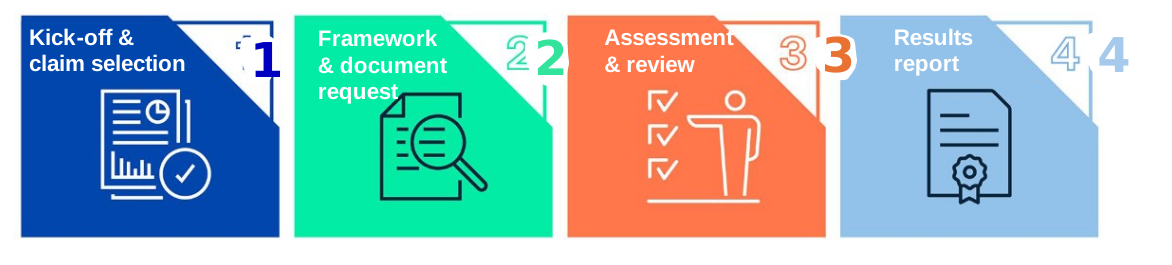
What TÜV SÜD delivers:
What clients gain:
With the application date approaching, organisations should identify environmental claims in use, review supporting evidence, assess sustainability labels and establish governance processes for future claims. Early preparation helps reduce remediation costs and supports smoother compliance.
Are your environmental claims compliant with the Empowering Consumers Directive? Request an expert review of your green claims, sustainability labels and evidence framework to prepare for EmpCo compliance.
Site Selector
Global
Americas
Asia
Europe
Middle East and Africa
