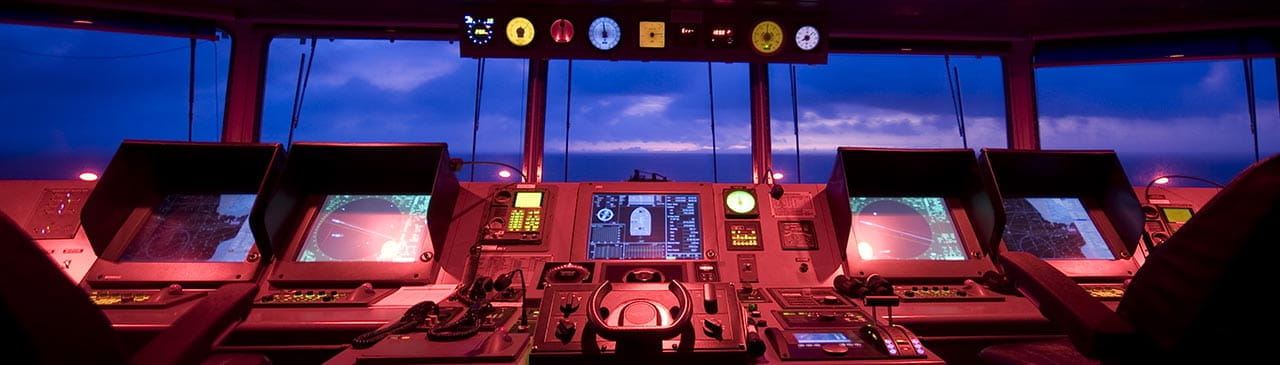
IEC 60945 testing for marine navigation and communication equipment. EMC, vibration and environmental testing to support compliance.
IEC 60945 testing for marine navigation and communication equipment. EMC, vibration and environmental testing to support compliance.
System-level marine validation
Integrated testing across environmental, interface and cybersecurity requirements helps verify complete marine systems, not just individual components.
Support from testing to approval
We align testing with regulatory and classification frameworks, helping manufacturers build the technical evidence needed for certification and approval.
Reduced integration risk
Validation at both component and system level helps identify interoperability and performance issues early, reducing risk across complex marine systems.
Flexible UKAS accredited scope
Tests within our laboratory capabilities can be added quickly to our UKAS accreditation scope, helping reduce delays and keep projects progressing efficiently.
Global network of laboratories
Our global laboratory capabilities and expert support can help streamline IEC 60945 testing and certification, reducing time to market for your marine products.
Choice of testing location
Our service can suit your needs and time to market goals, as accredited testing can be performed at our advanced test laboratories or off-site at your premises.
TÜV SÜD’s globally accredited laboratories (DIN EN ISO/IEC 17025) have a large environmental testing portfolio. Our experts have been conducting climatic testing and mechanical shock and vibration testing on marine equipment for over 50 years. We are also a globally renowned electromagnetic compatibility (EMC) testing service provider. Our experts deliver a highly flexible service to fit with your business needs and time to market goals, as accredited testing can either be performed at our advanced test laboratories or off-site at your premises.
TÜV SÜD’s test facilities can simulate either single or multiple environmental conditions simultaneously. Any test not on our UKAS scope, but which is within our capability, can be added quickly through our flexible schedule, which is a rare privilege granted to us by our accrediting authority.
Outcome: Clear, targeted testing strategy
Outcome: Verified robustness under marine conditions
Outcome: Reliable communication across onboard systems
Outcome: Reduced risk of product failure in the field due to mechanical intrusion, dust, accidental contact and water into casings and enclosures
Outcome: Stronger and more complete approval evidence
Get expert support for IEC marine equipment testing, from environmental and EMC testing through to system validation and approval readiness.
IEC 60945 is an international standard specifying performance, environmental, electromagnetic compatibility (EMC) and safety requirements for marine navigation and radiocommunication equipment. It defines tests to verify reliable operation in marine conditions, including temperature, humidity, vibration and electrical interference.
It commonly applies to equipment such as radar, ECDIS, AIS, GNSS receivers, VDRs, GMDSS radios, NAVTEX receivers and other bridge-mounted electronics.
Yes. IEC 60945 includes emissions and immunity testing to confirm that equipment does not cause interference and can continue operating when exposed to electromagnetic disturbances.
IEC standards are widely referenced in regulatory and classification frameworks. Demonstrating compliance is often essential for system integration and approval.
Meeting IEC requirements is not just about passing individual tests.
Manufacturers must demonstrate that their equipment:
At the same time, IEC standards are often:
IEC testing should be introduced early in development to identify risks, validate system performance, and align with approval requirements.
IEC testing plays a central role in marine equipment validation.
Without robust testing:
Testing helps manufacturers:
To simplify, IEC-based marine testing can be grouped into two core areas:
IEC 60945 defines the environmental and electromagnetic requirements for marine equipment.
This includes:
Why it matters:
Marine environments introduce constant stress. Equipment must continue to perform reliably without degradation or interference.
The IEC 61162 series defines how onboard systems communicate and exchange data.
This includes:
Why it matters:
Modern vessels rely on data exchange between systems such as GNSS, AIS, ECDIS, and communications platforms. Reliable interfaces are critical for safe and effective operation.
Marine equipment must perform reliably in some of the most demanding environments while supporting safe communication and integration with other onboard systems.
IEC standards form the foundation for demonstrating this performance, covering environmental resilience, system interfaces, and cybersecurity requirements.
TÜV SÜD supports manufacturers with testing and validation services aligned to key IEC standards, helping ensure equipment is robust, interoperable, and ready for approval.
Our services cover environmental resilience, EMC performance, data interfaces, interoperability, and cybersecurity requirements. By combining component and system-level validation with support for regulatory and classification requirements, we help manufacturers reduce integration risks and build stronger approval evidence.
Validate performance, interoperability and cybersecurity before approval with TÜV SÜD's integrated marine testing expertise.

The impact of AIS international standards and requirements, and what manufacturers need to do to get past these hurdles.
Learn more
Site Selector
Global
Americas
Asia
Europe
Middle East and Africa
